


Die Cutting
Reaching New Heights in Print Design
Now, die-cutting is just miraculous; it turns a simple piece of paper into just magic. For, after all, this is more than a process. Your product will shine with the subtle skill of print design that attracts an audience with panache and high accuracy, inventiveness.
How about this: a cut-out invitation in the form of beautiful cut-out patterns. That
business card with rounded corners almost felt uniquely created right from the get-go.
Such can be realized through die cutting – that secret ingredient that will help push your printed material from ordinary to spectacular through that defining touch.
Die Cutting
- Size: Available in all shapes and sizes
- Stock: 14pt, 16pt, 18pt and 24pt White SBS C1S C2S
- Finishing options: Glossy, Matte, Aqeous Coating, Spot UV
- Add on choices: Available in all shapes and sizes


Send Us a Message
Contact Information


Do you have questions about how we can help your company? Send us an email and we’ll get in touch shortly.
The die-cutting process: What is that?
It is a very simple process. Die cutting can be described as using a specially designed
“die” to cut paper, cardboard, or other materials in a specific shape or design. The die sliced the material perfectly and repeatedly, like a cookie cutter. It lets designers break loose from these strict confines of the square or rectangular box and create a truer, eye-catching shaped design.
The use of die cutting on printed products will also vary significantly in terms of their
depth and ingenuity-from windows in packaging to intricate patterns on cards or
intricately formed labels.
Why It Matters to Die-Cutting?
It really is very tough to gain attention to the printed physical things in the virtual
scenario. But die cutting helps break all the rules related to it.
Originality and Customization:
The print creations will acquire their unique personal touch in die-cutting. Die-cut looks whimsical, curving edge or strongly geometric that may fit perfectly for the brand’s identity; die-cut can deliver the personality of your brand that a simple print cannot.
Tactile Engagement:
A die-cut print piece that is held makes a different effect.
Surprising textures and forms motivate people to touch them and interact. Be it a
different business card or an invitation with a customized shape, people want to hang
onto these for longer as they just feel special and different. The message hence feels
when there is a tactile engagement.
Brand Recognition:
Die-cut patterns give an impression among consumers. Because it is any given thing other than the norm, a die-cut business card or product package grabs attention immediately. Consumers will associate quality and attention to your brand if they somehow feel that extra effort and uniqueness of design builds up into its reputation.
Types of Die Cutting: Taper your Design
Many design options can be realized through die cutting. Those methods most popularly used in die cutting can certainly inspire your next project.
Basic Shape Die Cutting:
Material is being cut into those visually striking, intellectually simple shapes past just rectangles, like squares and circles with rounded edges.
Kiss cutting:
The process leaves part of the backing material behind as it cuts partially through. The technique is much favored for the stickers and labels, since their final shapes are not particularly hard to remove without cutting all the way through the material.
The perforation cutting will leave a clearly visible tear mark not to be torn until the paper is ready to be used this way, in which it can make it fit for tickets or coupons. Embossing and Debossing: These aren’t technically cutting techniques because these processes involve giving materials texture and added dimension by carving raised or recessed motifs into them with dies.
Window die cutting:
It is very common when it is used in packaging. Cut-outs are done to make a window whereby you can display the contents. It is a great way of bringing taste and functionality together. Die-cutting gives one umpteenth possibilities of creativity because one is able to create items that clearly highlight your ideas and the
message.
Cutting in Packaging: The Superb Factor
It can really revolutionize the packaging industry. Openings, sometimes, are a far more
exercise in relation with the package rather than with its contents, die cutting takes
packaging way beyond being just a sac enclosing contents-it becomes part of the story.
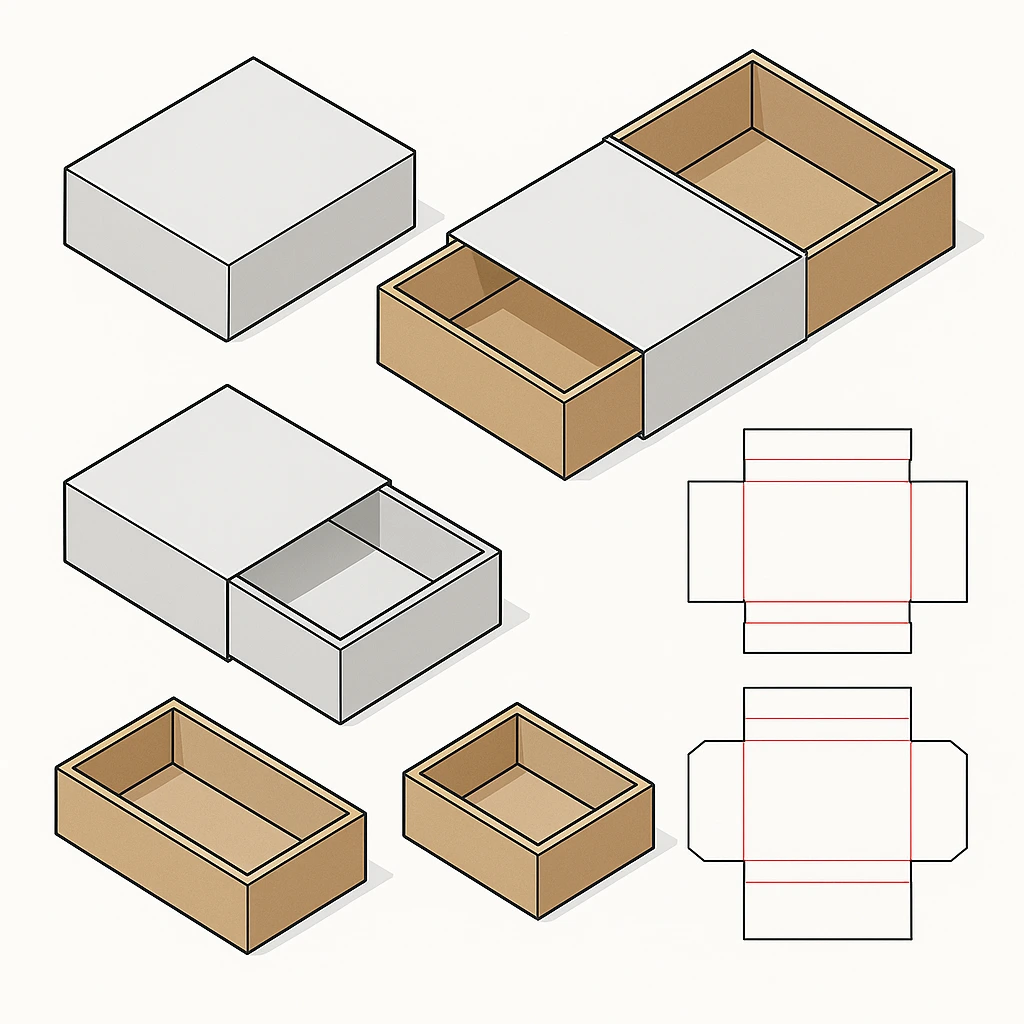
Imagine this: a product arriving in an incredibly beautiful box with intricately cut out
patterns-or maybe even a creative window through which you get a sneak peek of what awaits you inside. This, therefore, is in a nutshell the magic of die-cutting-turning your packaging into an experience that shall prove to your customers just how much thought has been put into every detail.
It gives a feel of tactility to packaging and will indeed pop out on the shelf for the
customer to open up. It may be the best way of communicating exclusivity, richness, or inventiveness even before one opens the box.
Different die-cutting types: Preparing your design:
The lot of die cutting designs would be different. Here are some popular die-cutting
methods that might just inspire your next project:
Basic shape die cutting:
This cut will now cut the material into striking, eye-simple shapes beyond the normal rectangular patterns of squares, circles, and rounded edges. Kiss cutting: It keeps the adhesive of a material by cutting one part of it. Since it creates shapes that are removable easily without cutting the material fully, most sticker and
label formats utilize it.
Perforation Cutting:
It creates a dotted line intended to tear easily but will not tear unless you want it to. Good for items like tickets or coupons. Strictly speaking,
embossing and debossing are not cutting techniques. Instead, they give material a
texture by using dies that cut the design as relief or in relief.
Conclusion Die Cutting's Power
Die cutting is an artistic technique that can raise your printed goods to a truly
remarkable level. It is much more than a purely technical process. As such, it is invaluable for anyone trying to make an indelible mark for the sheer reason of touching and moving the emotions while giving a seamless overall design boost.
Die cutting will be the best choice when you are ready to take your print design to the
next level. By using die cutting, you will be able to get unique forms and textures that
set up your product. Whatever type of packaging, marketing material, or invitation you
will be making, it can stand out and receive praise.
FAQs About Die Cutting: Quick Answers
What is die cutting and why?
Die cutting is basically magic. It takes something from a unique design and cuts material into forms. That is the exact magic by which it transforms ordinary prints into impressive works of art with an impression.
What can I cut?
Die cutting is highly versatile-all paper, cardstock, cardboard, and even some polymers and fabrics may be cut using it. It is therefore a perfect choice for anything that calls for that little creative touch, such as packaging and invitations.
What are the dimensions and shapes that give die cutting its uniqueness from traditional printing?
It’s not a conventional press print as it does afford dimension and shape. Therefore, your design is a touchy-feely, never-to-be-forgotten experience since it’s something you can touch aside from what you are seeing.
Can my die-cut designs be exclusive?
Absolutely! Die cutting is totally flexible. Intricate designs, unique forms, or windows can be created to highlight your brand or message.
How much does die cutting cost?
Die cutting may be more expensive than regular printing, but at least no price tags have to be paid to the memories that they bring. Die-cut parts make for a good investment for special projects because they would be memorable.
How long does die-cutting take?
The pay-off to the waiting game has been worth it, whether your design is intricate or not. Any intricate design will take ages to complete, but simple shapes will be ready in just a few days’ time for printing.
Can I print a sample first and then the entire run?
Most print services offer a proof or sample so that you can see and feel your design
before committing to printing it. Usually, there is excitement about grasping your first
die-cut product!
What are die cuts good for projects
Die cutting is best used for business cards, invites, packaging, stickers, and promotional items. It adds some flair
Is die cutting an environmentally friendly practice?
This is true. Make a die-cut production that is Eco-friendly through sustainable
processes or recycle material.
Why is die cutting important?
Die cutting gives a personal connection. The one-of-a-kind silhouettes and textures
produced through imaginative and careful design will be unforgettable.